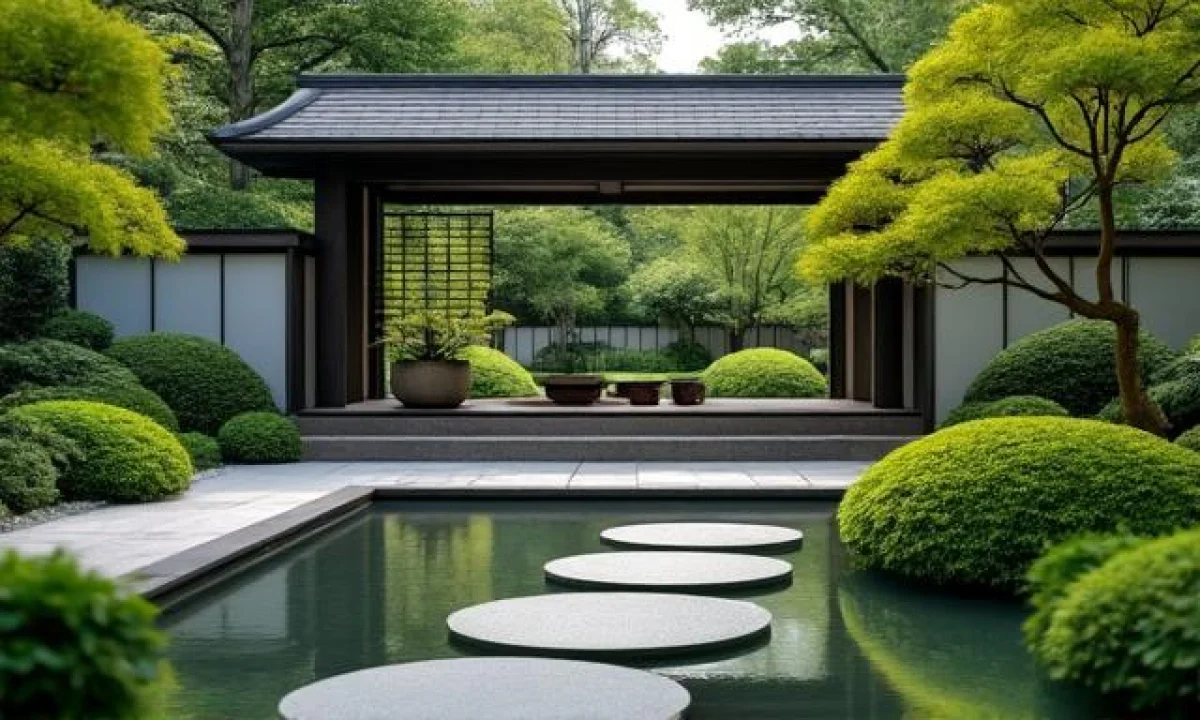
Picture this: You’re back from a long day in London—maybe you’ve been stuck in the Tube, dodging rain in Manchester, or just staring at spreadsheets in a glass office in Birmingham. You step into your garden, and suddenly, the noise fades. No more honking cars, no more chatter, no more anything. Just the soft crunch of gravel underfoot, the whisper of wind through bamboo, and the quiet weight of a perfectly placed stone. That’s the power of a Japanese garden. It’s not just a patch of green—it’s a sanctuary. A place where you can hit reset.
But here’s the kicker: You don’t need a mansion in the Cotswolds or a team of landscape designers from the Royal Horticultural Society to make it happen. A Zen garden—or karesansui, if you’re feeling fancy—can fit into a tiny backyard in Brighton just as easily as a sprawling estate in Surrey. The secret? It’s not about size. It’s about intent. And that’s exactly what we’re going to break down for you today.
By the time you finish reading, you’ll know:
- How to design a Japanese garden that actually feels like one (no cheesy garden centre knockoffs).
- The 7 principles of a Zen garden—and how to apply them without overcomplicating things.
- Which shrubs, stones, and water features to use (and where to source them in the UK, because let’s be real—you’re not flying to Kyoto for a bag of gravel).
- How to create a Japanese garden for beginners without wasting money on mistakes.
- The rules of a Zen garden—and when it’s okay to break them (spoiler: more often than you think).
So grab a cuppa, put your feet up, and let’s get started. Your future landscape art awaits.
Why a Japanese Garden? The Science Behind Why It Works (And How It’ll Change Your Brain)
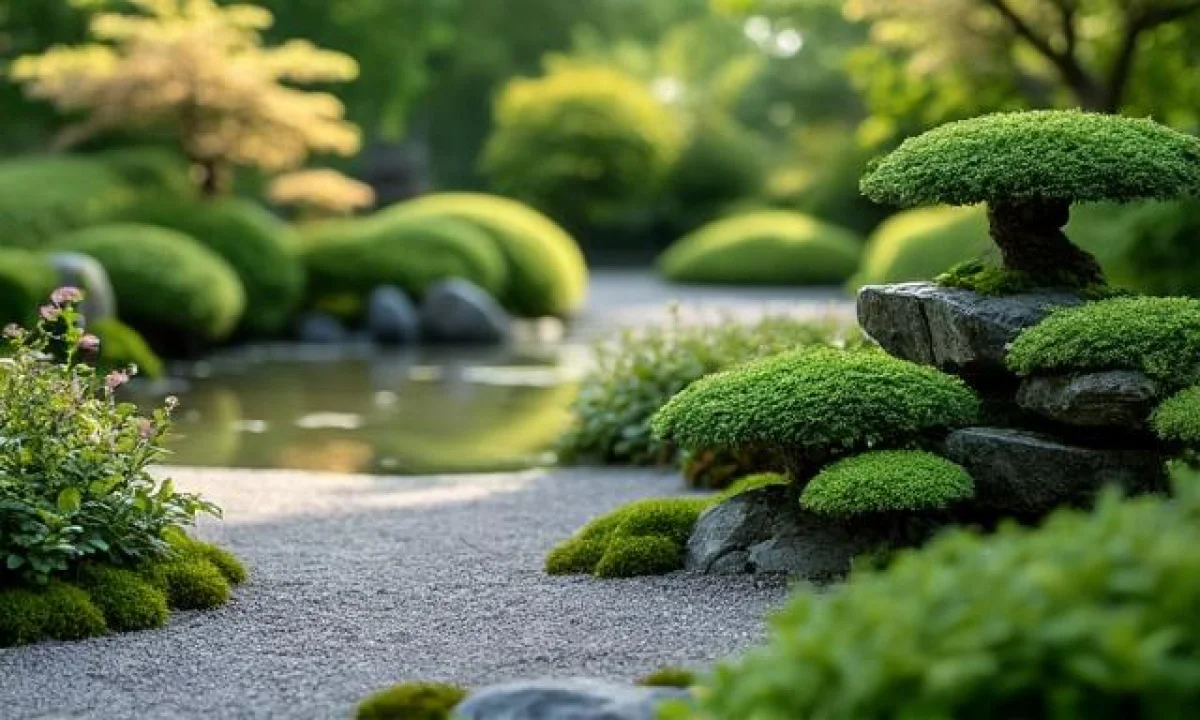
Let’s cut to the chase: A Japanese garden isn’t just pretty. It’s engineered for calm. Studies from the University of Exeter (yes, right here in the UK) found that spending just 20 minutes in a garden can reduce cortisol (that’s your stress hormone) by up to 28%. But a Zen garden? It’s like that effect on steroids. Here’s why:
- It forces you to slow down. No clutter. No chaos. Just intentional space. Your brain isn’t wired to handle that much simplicity—so it relaxes.
- It mimics nature (but better). Japanese gardens aren’t random. They’re curated to look like miniaturised landscapes—mountains, rivers, forests. Your brain recognises the pattern and goes, “Ah, this makes sense.”
- It’s a sensory reset. The sound of gravel underfoot? The smell of moss after rain? The way light filters through bamboo? Your brain latches onto these details and lets go of the rest.
And here’s the best part: You don’t need a degree in landscape design to pull it off. The Japanese have been perfecting this for centuries—and they’ve left us a playbook. Let’s dive in.
The UK Twist: Where to Source Your Materials (Without Selling a Kidney)
You’re not in Japan, and that’s fine. The UK has plenty of spots to score authentic (or at least authentic-looking) materials. Here’s where to start:
- Stones: Skip the garden centre’s “exotic rocks” section. Head to local quarries (yes, really) or lime suppliers in the Midlands or Yorkshire. They’ve got real stone—none of that plastic nonsense. Budget: £50–£200 per tonne depending on size.
- Shrubs & Bamboo: Bluebell Nurseries (Surrey) or Primrose (nationwide) carry Japanese maples, azaleas, and Fargesia bamboo (the non-invasive kind—trust me, you do not want running bamboo). Pro tip: Buy in late autumn (October–November) for 30–50% off.
Pro move: Hit up eBay or Facebook Marketplace for second-hand lanterns or stone statues. People buy this stuff, get bored, and resell it for a fraction of the price. You’ll find genuine Japanese garden decorations for £20–£100 if you’re patient.
The 7 Principles of a Zen Garden (And How to Apply Them Without Overthinking)
Forget “rules.” These are guidelines. The Japanese call them shichi no toki—the seven elements of harmony. Your garden doesn’t need all of them, but the more you nail, the more authentic it’ll feel.
1. Simplicity (Kanso) – Less Is More (But Not No)
Clutter is the enemy. A Zen garden should look like it was meant to be that way—not like you just dumped a load of stuff in a corner. Think:
- One focal point (a rock, a lantern, a single tree).
- Clean lines. No zigzags. No “oops, that shrub grew weird” energy.
- Negative space is your friend. Leave room to breathe.
Example: A single accent stone (like a lantern-shaped rock) in a bed of raked gravel. That’s it. No flowers. No gnomes. Just that.
2. Asymmetry (Fukinsei) – Balance, Not Symmetry
Forget the “mirror image” gardens you see in stately homes. Japanese gardens are asymmetrical. One big rock on the left, two smaller ones on the right. A curve in the path that doesn’t match the other side. It’s intentional imbalance—and it’s harder to pull off than symmetry.
Pro tip: Use the “rule of thirds” (like in photography). Divide your space into thirds and place key elements along those lines. Not in the centre.
3. Naturalness (Shizen) – Fake It Till You Make It (But Make It Real)
This is where people screw up. A Zen garden isn’t wild. It’s curated nature. Every rock, every plant, every grain of sand should look like it belonged there—even if you placed it yourself.
- Use local stones (limestone, slate, granite). They’ll blend in better than imported “exotic” rocks.
- Let plants grow naturally. No topiary animals. No perfectly round bushes. Just shape them with pruners.
- Moss is your best friend. It softens hard edges and makes everything look older (in a good way).
4. Restraint (Yūgen) – Hint at More Than You Show
This is the art of suggestion. A Zen garden doesn’t show you everything—it hints. Like:
- A path that disappears into shrubs (suggesting a journey).
- A single lantern half-hidden by bamboo (suggesting a temple).
- A small water feature that you only hear when you’re close (suggesting a river).
Think of it like a story. Your garden should make people wonder what’s around the corner.
5. Space (Ma) – The Gap Between Things
This is where Western gardens fail. We cram stuff in. The Japanese? They leave room. Ma is the space between elements—and it’s just as important as the elements themselves.
- Don’t plant shrubs touching each other. Leave 30–50cm gaps.
- Rake gravel in patterns (ripples, circles) to create visual breathing room.
- Use vertical space (tall bamboo, trellises) to draw the eye up.
6. Imperfection (Wabi-Sabi) – Embrace the Flaws
Cracked stones? A tree with a bent trunk? Perfect. The Japanese celebrate imperfection—it’s called wabi-sabi. Your garden shouldn’t look like a showroom. It should look lived-in.
- Leave a few weeds (yes, really). Just not too many.
- Use unpolished wood for fences or bridges. Rough > smooth.
- Let moss grow on rocks and paths. It ages everything beautifully.
7. Harmony (Wa) – Everything Works Together (Or It Doesn’t)
This is the glue that holds it all together. Every element should feel like it belongs with the others. No clashing colours. No random decorations. If something jars, it’s out.
Quick check:
- Do the colours work together? (Greens, greys, whites, and earthy tones = safe.)
- Do the textures contrast nicely? (Smooth stone + rough bark + soft moss = win.)
- Does it feel cohesive? (If you’re not sure, step back and squint. Your eyes will tell you.)
How to Create Your Own Zen Garden: A Step-by-Step (No Fluff) Guide
Alright, let’s get hands-on. You’ve got the theory. Now it’s time to build. Here’s how to do it without hiring a landscape designer (and without screwing it up).
Step 1: Pick Your Spot (And Check the Rules First)
Before you dig, check your council’s rules. In the UK, you might need planning permission for:
- Water features over 30cm deep (Environment Agency rules).
- Structures over 2m tall (like a wooden bridge or pergola).
- Changes to listed buildings or conservation areas (check here).
Pro tip: If you’re renting, ask your landlord first. Some won’t care. Others will treat your garden like a crime scene.
Now, where to put it?
- Sun vs. Shade: Most Japanese gardens thrive in partial shade (3–5 hours of sun/day). If you’ve got a full-sun spot, go for drought-tolerant plants like Japanese maple (Acer palmatum) or dwarf conifers.
- Size Matters: Even a 2m x 3m space works. Scale down everything (smaller rocks, dwarf shrubs, a tiny water feature).
- Accessibility: Can you see it from your window? Can you sit in it? If not, it’s not a garden—it’s a decorative rock pile.
Step 2: Design It (Or Don’t—Here’s the Lazy Way)
You’ve got two options:
- The “I’ve Got Time” Method: Sketch it out. Use graph paper or Garden Design software. Play with layouts until it feels right.
- The “I Just Want It Done” Method: Steal a layout. Here are 3 proven designs that work in the UK:
| Design Name | Best For | Key Features | UK-Friendly Plants |
|---|---|---|---|
| Karesansui (Dry Garden) | Small spaces, low maintenance |
|
|
| Tsukiyama (Hill-and-Pond Garden) | Medium spaces, water lovers |
|
|
| Koi Pond Garden | Larger spaces, high maintenance |
|
|
Pro tip: If you’re really lazy, buy a pre-made Zen garden kit from Thompson & Morgan or Crocus. They’ve got everything you need—stones, plants, gravel—just add water.
Step 3: Build It (Tools You’ll Actually Need)
You don’t need a £500 toolkit. Here’s the bare minimum:
- Rake (a Japanese-style rake for gravel patterns, or a regular one).
- Wheelbarrow (or a strong back for hauling gravel).
- Pruners (Felco No. 2, £20, lasts forever).
- Level (to make sure paths and gravel are even).
- String & pegs (for marking out layouts).
Optional (but nice):
- A Japanese watering can (yes, they exist—Not on the High Street sells them).
- A small hand saw (for trimming bamboo).
Step 4: Plant It (The UK-Friendly Way)
Forget exotic plants. These 10 shrubs and plants thrive in the UK and look Japanese:
- Japanese Maple (Acer palmatum) – The star of any Zen garden. £20–£100 depending on size. Loves partial shade.
- Bamboo (Fargesia robusta) – Clumping (not invasive), £30–£80. Plant in full sun to partial shade.
- Dwarf Pine (Pinus mugo) – Slow-growing, £15–£50. Perfect for rock gardens.
- Azalea (Rhododendron japonicum) – Blooms in spring, £10–£40. Needs acidic soil.
- Japanese Iris (Iris ensata) – Grows by water, £8–£25. Loves moist soil.
- Hostas (Hosta sieboldiana) – Big leaves, £10–£30. Keep in shade (slugs love them).
- Sedge (Carex oshimensis) – Grass-like, £8–£20. Great for ground cover.
- Moss (Bryophytes) – Free (if you harvest it) or £5–£15 for plugs. Grows on rocks and paths.
- Weigela (Weigela florida) – Flowers in summer, £12–£35. Full sun to partial shade.
- Dwarf Cherry (Prunus incam ‘Kojo-no-mai’) – Tiny tree, £40–£120. Stunning in spring.
Pro tip: Buy bare-root plants in winter (November–March). They’re 30–50% cheaper and establish faster.
Step 5: Add the Finishing Touches (The Stuff That Makes It Feel Real)
This is where most people mess up. They stop at “plants and rocks” and miss the details that make a garden feel Japanese. Here’s what to add:
- Gravel or Sand:
- Use white or grey gravel (10–20mm size).
- Rake it in patterns (ripples, circles, or straight lines).
- Pro move: Mix in a few larger stones for contrast.
- Water Feature:
- Even a small bamboo spout (£15–£40) dripping into a basin adds sound.
- If you’ve got space, a mini pond (£50–£200) with a submersible pump (£30–£80).
- No water? Use a dry stream bed (gravel + a few “stepping stones”).
- Lanterns & Statues:
- A stone lantern (£50–£200) is the holy grail of Zen gardens.
- No lantern? A simple wooden torch holder (£20–£60) works.
- Add a small Buddha statue (£15–£50 from eBay) for symbolism.
- Paths & Bridges:
- Use stepping stones (£10–£30 each) or wooden planks (£20–£50).
- If you’ve got a pond, a small bamboo bridge (£80–£200) is iconic.
- No bridge? Just step stones in the gravel.
- Lighting:
- Solar-powered path lights (£10–£25 each) along the edges.
- A single spotlight on a key feature (like a maple tree).
- No lights? Use lanterns with candles (safety first—keep them away from plants).
Step 6: Maintain It (Without Losing Your Mind)
A Zen garden isn’t no-maintenance. But it’s low-maintenance if you do it right. Here’s how:
- Raking Gravel:
- Do it every 2–4 weeks (or after rain).
- Use a Japanese rake (£20–£50) for those swooshy patterns.
- Pro tip: Rake in different directions each time to avoid ruts.
- Pruning:
- Trim bamboo and shrubs in late winter (February–March).
- Remove dead leaves in autumn (but leave some for winter interest).
- Shape maples and pines in early summer (June).
- Watering:
- Most Japanese plants hate soggy roots. Water deeply but infrequently.
- Use a watering can with a fine rose (£10–£20) to avoid disturbing gravel.
- Mulch with bark chips (£5–£15 per bag) to retain moisture.
- Weeding:
- Pull weeds by hand (no chemicals—this is a natural garden).
- Lay landscape fabric (£10–£20) under gravel to block weeds.
- Let a few “wild” plants grow (like clover) for texture.
- Winter Care:
- Wrap tender plants (like azaleas) in burlap (£5–£10).
- Cover ponds with a net to keep out leaves.
- Let moss and lichen grow—it ages the garden beautifully.
Time commitment: 1–2 hours per month (less in winter). That’s less than mowing a lawn.
Japanese Garden for Beginners: How to Start Small (And Not Waste Money)
You don’t need a £10,000 budget or a team of gardeners to pull this off. Here’s how to start small and scale up:
Option 1: The £100–£300 Starter Garden (2m x 3m Space)
Perfect for balconies, small patios, or tiny backyards. This is the minimalist approach—just the essentials.
- 1 x Japanese Maple (Acer palmatum) – £30
- 1 x Clumping Bamboo (Fargesia robusta) – £40
- 1 x Dwarf Pine (Pinus mugo) – £20
- 1 bag White Gravel (20kg) – £15
- 3 x Accent Stones (£10 each) – £30
- 1 x Small Lantern (or DIY with a terracotta pot) – £20
- 1 x Bamboo Water Spout (or a cheap plastic one) – £15
- Tools (fork, rake, pruners) – £40
- Misc (mulch, stakes) – £20
Total: ~£210
Why it works:
- You’ve got height (maple), texture (bamboo), and structure (stones).
- The gravel ties it all together.
- It looks intentional even if it’s small.
Where to buy:
- Bluebell Nurseries (Surrey)
- Primrose (nationwide)
- eBay (for stones and lanterns)
Option 2: The £500–£1,000 Mid-Sized Garden (4m x 5m Space)
Now you’ve got room to play. This is where you can add a small water feature or a wooden bench.
- 1 x Japanese Maple – £50
- 1 x Dwarf Cherry Tree – £80
- 2 x Azaleas – £30
- 1 x Hostas (3 plants) – £25
- 2 bags White Gravel (40kg) – £30
- 5 x Accent Stones (£15 each) – £75
- 1 x Stone Lantern – £100
- 1 x Mini Pond Kit (with pump) – £150
- 1 x Bamboo Bridge (or stepping stones) – £100
- Tools & Misc – £50
Total: ~£660
Why it works:
- You’ve got layers (trees, shrubs, ground cover).
- The water feature adds sound and movement.
- The bridge or stepping stones makes it feel like a journey.
Where to buy:
- Water Features Direct (Nottingham)
- Thompson & Morgan (nationwide)
- Gardeners’ World (for design inspo)
Option 3: The £1,500+ Dream Garden (6m x 8m+ Space)
This is where you go all out. Koi pond? Check. Full-sized lanterns? Check. Hand-carved wooden bridge? Why not?
- 2 x Japanese Maples – £150
- 1 x Full-Sized Bamboo Screen – £200
- 3 x Azaleas + 2 x Hostas – £60
- 3 bags White Gravel (60kg) – £45
- 7 x Accent Stones (£20 each) – £140
- 1 x Large Stone Lantern – £250
- 1 x Koi Pond Kit (with pump & liner) – £400
- 1 x Wooden Bridge – £300
- 1 x Garden Bench (cedar) – £150
- Tools, Lights, Misc – £150
Total: ~£1,845
Why it works:
- It’s a full sensory experience (sight, sound, touch).
- The koi pond is the centrepiece.
- You can entertain here—it’s a real garden, not just decor.
Where to buy:
- Crocus (for high-end plants)
- Dobbies (for gravel and stones)
- Landscape Online (for bridges and benches)
Where to Find Help (If You Don’t Want to DIY)
Not everyone’s got time to dig and rake. If you want a pro but don’t want to pay £5,000, here’s where to look:
- Landscape Designers (£500–£2,000):
- Society of Garden Designers (UK-based pros)
- Landscape Institute (find a chartered designer)
- Local garden centres often have in-house designers (cheaper than big firms).
- Gardeners for Hire (£20–£40/hour):
- hecktasker (UK-wide)
- Airtasker (for one-off jobs)
- Ask neighbours or check Gumtree for local gardeners.
- Workshops & Courses:
- RHS Gardens (Wisley, Harlow Carr) – Japanese garden workshops.
- Kew Gardens – Landscape design courses.
- The Japanese Garden (Surrey) – Hands-on classes.
Pro tip: If you’re in London, Manchester, or Edinburgh, check Eventbrite for Japanese garden meetups. You’ll meet enthusiasts who can give you free advice.
Here’s the thing: A Japanese garden isn’t just a project. It’s a habit. A way to slow down in a world that’s always rushing. You’re not building it for Instagram. You’re building it for you.
So where do you start? Right now. Not next week. Not when you “have time.” Today.
- Grab a notebook and sketch out a tiny corner of your garden. Even if it’s just a 1m x 1m patch.
- Buy one plant this week. A Japanese maple. A bamboo. Something that feels right.
- Rake some gravel. Just try it. See how it feels.
- Sit in it. Breathe. That’s the whole point.
You don’t need perfection. You need progress. And if you’re still not sure where to start, here’s your first step:
[CTA: Download our FREE “Japanese Garden Starter Kit”] – A 5-page PDF with:
- A shopping list for your first plants and stones (UK suppliers included).
- A simple layout template you can print and sketch on.
- Our top 3 mistakes to avoid (so you don’t waste money).
- A checklist for your first month of maintenance.
It’s 100% free. No spam. No upsells. Just useful stuff to get you started. Grab it now—before you talk yourself out of it.
Your garden—and your mind—will thank you.
What are the 7 principles of a Zen garden?
The 7 principles of a Zen garden include simplicity, naturalness, asymmetry, symbolism, balance, harmony, and tranquillity. These principles help create a serene environment that reflects the beauty of nature and encourages meditation. Keeping these in mind will guide you in designing your own peaceful retreat.
How do I create my own Zen garden?
To create your own Zen garden, start by choosing a quiet space and clearing the area. Use gravel or sand for the base, then add stones, shrubs, and water features to enhance the calm vibe. Don’t forget to incorporate elements that resonate with you personally, making it a true reflection of your peace.
How do I create a Japanese garden for beginners?
Creating a Japanese garden as a beginner involves selecting a small area and incorporating key elements like rocks, plants, and water. Focus on simplicity and balance. Use local shrubs and stones to create a natural feel, and consider adding a small pond or fountain for that tranquil touch.
What are the rules of a Zen garden?
The rules of a Zen garden include maintaining simplicity, ensuring balance, and promoting harmony with nature. It’s essential to arrange elements thoughtfully, allowing for open spaces. Each component should contribute to a cohesive, calming experience, making the garden a perfect spot for reflection.
How can I make a Zen garden on a budget?
You can make a Zen garden on a budget by using inexpensive materials like gravel, reclaimed stones, and native plants. Check local garden centres or even DIY shops for deals. Focus on creating a serene space with minimal costs by reusing items or sourcing from your own garden.
What is a mini Zen garden?
A mini Zen garden is a small-scale version of a traditional Zen garden, designed for indoor or small outdoor spaces. It typically includes sand, small rocks, and miniature plants. Perfect for a desk or patio, it offers a tranquil escape and a chance to practice mindfulness in a compact form.
How to create a Zen garden step by step?
To create a Zen garden step by step, start by choosing your space, then lay down a base of gravel or sand. Next, arrange stones and add plants, ensuring balance and simplicity. Finish off with water features or decorations that resonate with you, creating a serene atmosphere to unwind.